
1. The saigon om Approach
Ancient wisdom. Mindful awareness. Modern understanding. Understand the principles. Embody the practice.
At saigon om, we believe Qi Gong becomes more meaningful when we understand what lies beneath the movements. Our approach brings together the traditional wisdom of Qi Gong and Traditional Chinese Medicine with mindfulness and a modern understanding of the body. We explore not only what we practice, but why we practice it — and how breath, awareness, intention, structure and Qi work together.
Our practice is grounded in four areas:
Traditional Chinese Medicine
Explore Qi, Yin and Yang, the Five Elements, meridians and the energetic principles that have shaped Qi Gong for generations.
Mindfulness
Cultivate presence and awareness so Qi Gong becomes more than physical movement — it becomes a practice of body, breath and mind.
Movement Science
Explore anatomy, biomechanics, fascia and functional movement to better understand how the body moves, adapts and finds ease.
Embodied Practice
Principles become meaningful when we can feel them. We learn through practice, observation, curiosity and direct experience.
2. What Is Qi Gong?
More than a sequence of movements. A practice of cultivating Qi
Qi Gong (氣功) can be translated as the practice or cultivation of Qi. Some practices are flowing and dynamic. Some strengthen and energize the body, while others encourage softness, grounding and restoration. Others are quiet and still so we may stand, breathe, soften, root or simply observe. But Qi Gong is more than a sequence of movements to remember. As our practice deepens, we begin to notice how we stand, how we breathe, where we hold tension and how we move through the world. The movements are the doorway. The practice is what we discover through them.
We explore questions such as:
What is Qi?
Why do we relax and root?
How do breath and intention influence practice?
What does it mean to cultivate rather than force?
How can Qi Gong support greater awareness in everyday life?
Over time, the movements become less something we perform and more something we embody.
3. Traditional Chinese Medicine + Qi Gong
Understanding the energetic roots of the practice
Traditional Chinese Medicine offers a rich framework for understanding the body, nature and our relationship with the changing world around us. Through Qi Gong, we explore concepts such as Qi, Yin-Yang, the Five Elements, meridians and the relationship between the seasons and our practice. These ideas give context to the movements and can also help us understand how emotional imbalance may arise and how our emotions are connected to our physical and energetic state.
Why might we practice differently in winter than in summer?
Why do certain movements traditionally relate to particular organs or meridians?
How might emotional patterns, stress or imbalance show up in the body?
What can our emotions teach us about what needs attention, support or care?
What does it mean to cultivate, circulate or conserve Qi?
Our intention is not to turn Qi Gong students into Chinese medicine practitioners. It is to give you enough understanding to make your Qi Gong practice richer, more thoughtful and more meaningful — while developing a deeper awareness of your emotions and the ways they influence your wellbeing.
You may explore:
Qi — cultivating, strengthening and guiding vital energy
Yin - Yang — understanding balance, relationship and change
Five Elements — exploring the qualities and relationships of Wood, Fire, Earth, Metal and Water
Meridians — understanding the energetic pathways used within Chinese medicine
Seasonal Practice — adapting practice to the rhythms and qualities of the seasons
Acupressure — exploring selected points as a complement to Qi Gong practice
4. Movement Science + Qi Gong
Ancient practice. Modern understanding of the body.
Traditional teachings give us one way of understanding Qi Gong. Anatomy and movement science give us another. At saigon om, we enjoy exploring where these perspectives meet. We look at how posture, joint movement, biomechanics, fascia, breathing and nervous-system awareness can help us better understand what we experience during practice.
You may explore:
Anatomy & Biomechanics
Understand how joints, muscles and movement patterns contribute to ease and efficiency.
Fascia
Explore the interconnected tissues of the body and how whole-body movement can influence mobility and coordination.
Rooting & Structure
Investigate how the feet, legs, pelvis and spine organise to create stability without unnecessary tension.
Relaxation & Efficiency
Learn to recognise excessive muscular effort and discover more economical ways of moving. Traditional language and modern science don't always describe the body in the same way. We don't need to force them to. Instead, we remain curious about what each perspective can teach us.
5. Courses & Workshops
Learn through practice, exploration and experience.
Our Qi Gong courses and workshops are designed for people who want to go beyond simply following movements. Offerings vary throughout the year and may include:
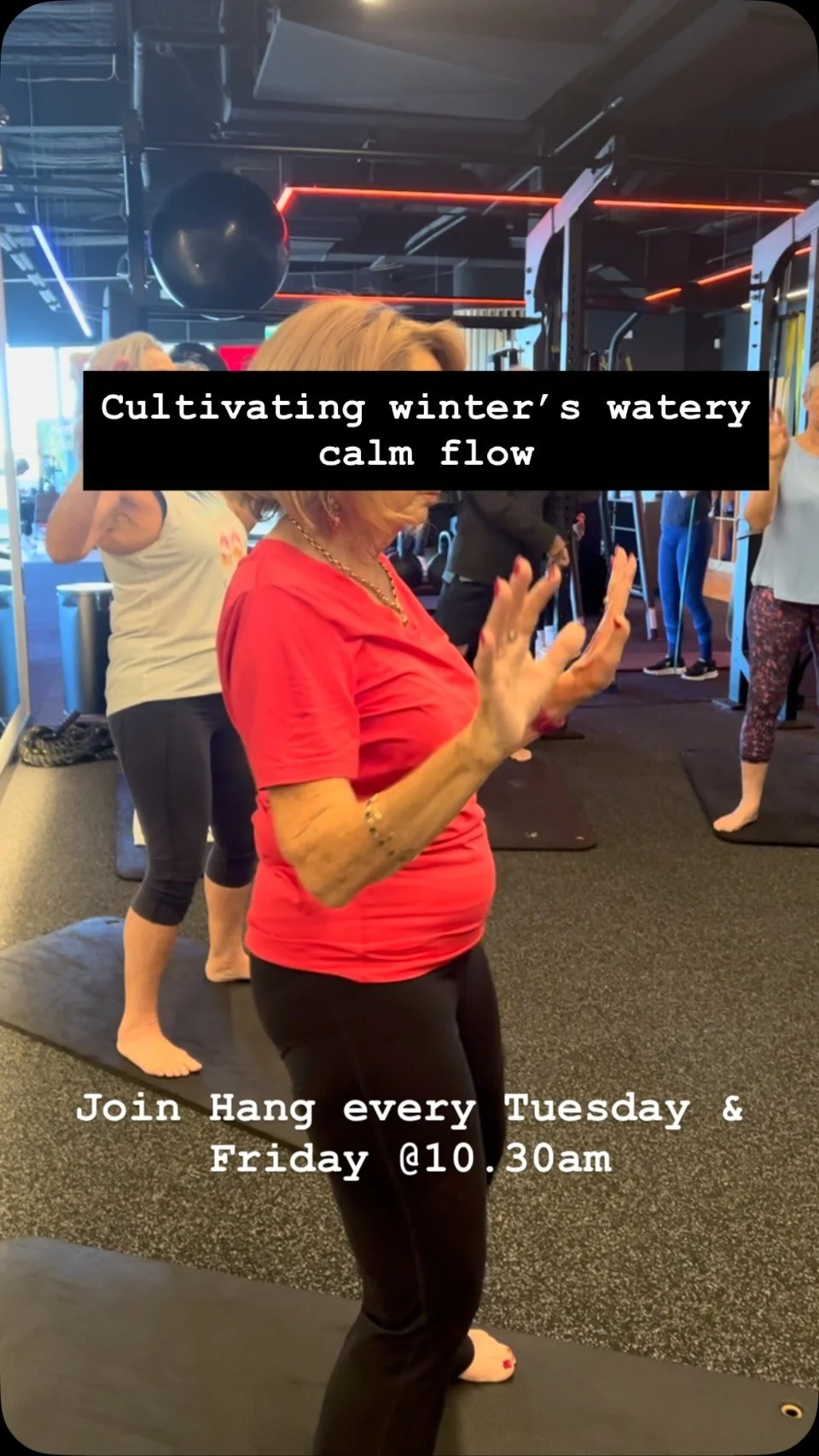
Seasonal Qi Gong
Practices inspired by Traditional Chinese Medicine and the changing seasons.
Qi Gong Foundations
Explore relaxation, rooting, breath, awareness and the fundamentals of practice.
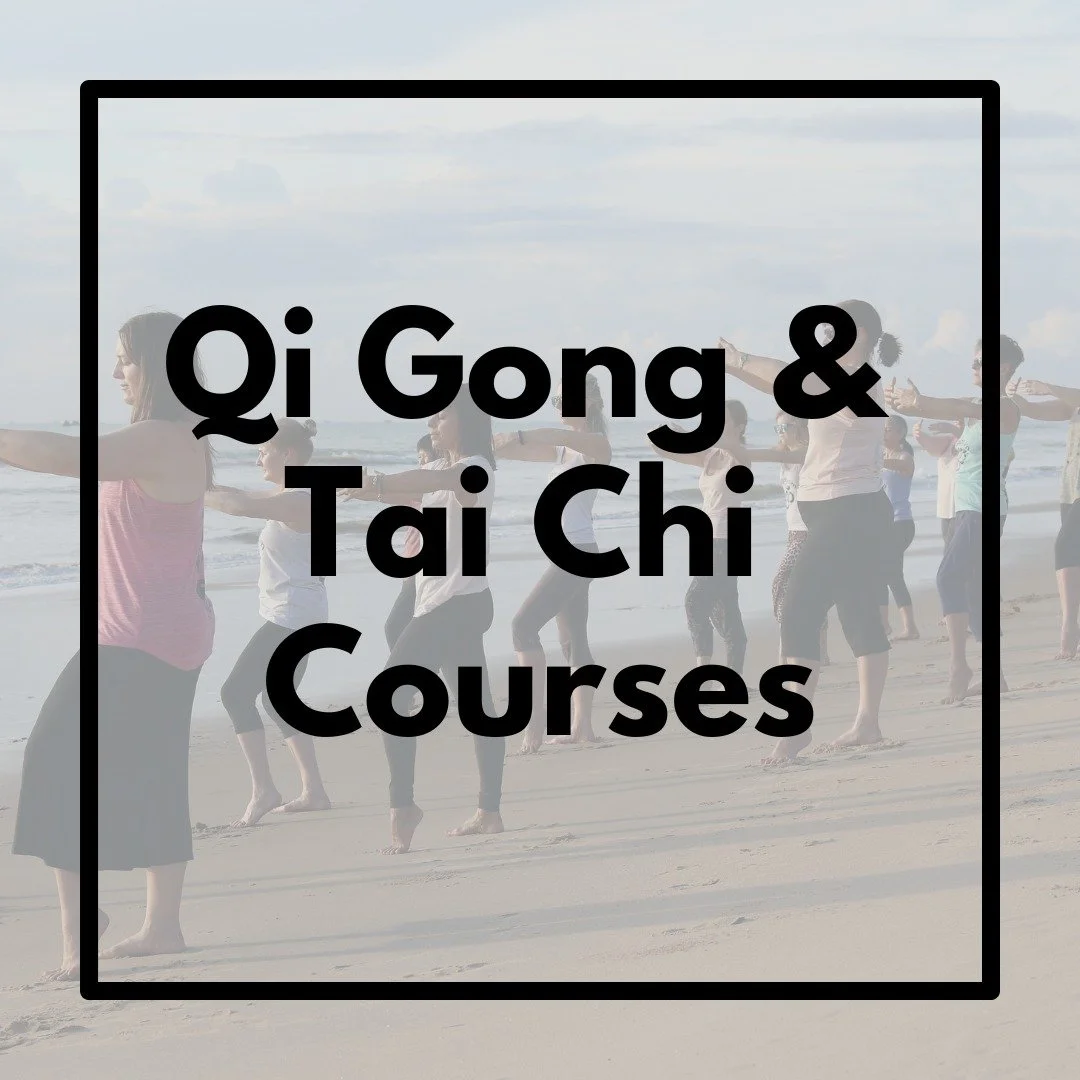
Tai Chi
Learn short and long Yang-style sequences while exploring balance, coordination, rooting and flow.
Fascia & Functional Movement
Explore mobility and whole-body movement through a Qi Gong lens.
Acupressure + Qi Gong
Combine selected acupressure points with movement, breath and awareness.
Special Workshops
Focused explorations of topics such as immunity, stress, the Five Elements, Qi cultivation and mindful movement.