
Vietnam Travel Guide
Travelling to Vietnam
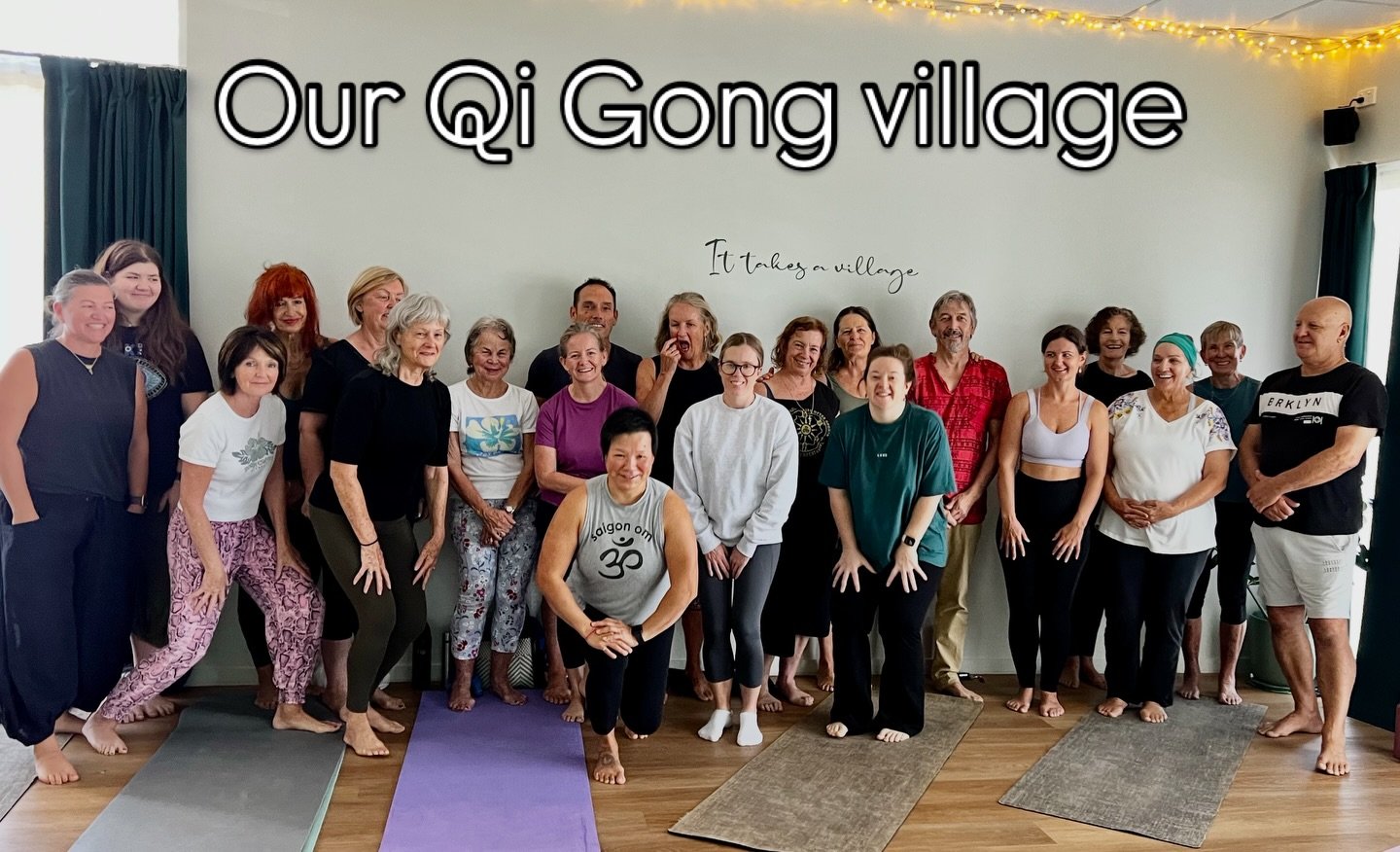
Vietnam is a Southeast Asian country known for its beaches, rivers, Buddhist pagodas, and bustling cities. We, Sarah and Hang, lived in Ho Chi Minh City (formerly known as Saigon) for seven years and it’s where our wellness school, saigon om, began in 2013. Below we will share some travel tips such as information about tourist visas, travel insurance, our favourite places to visit in Vietnam, and safety. We invite you to enjoy your breathing as you read through the guide and start planning your trip to beautiful and memorable Vietnam.
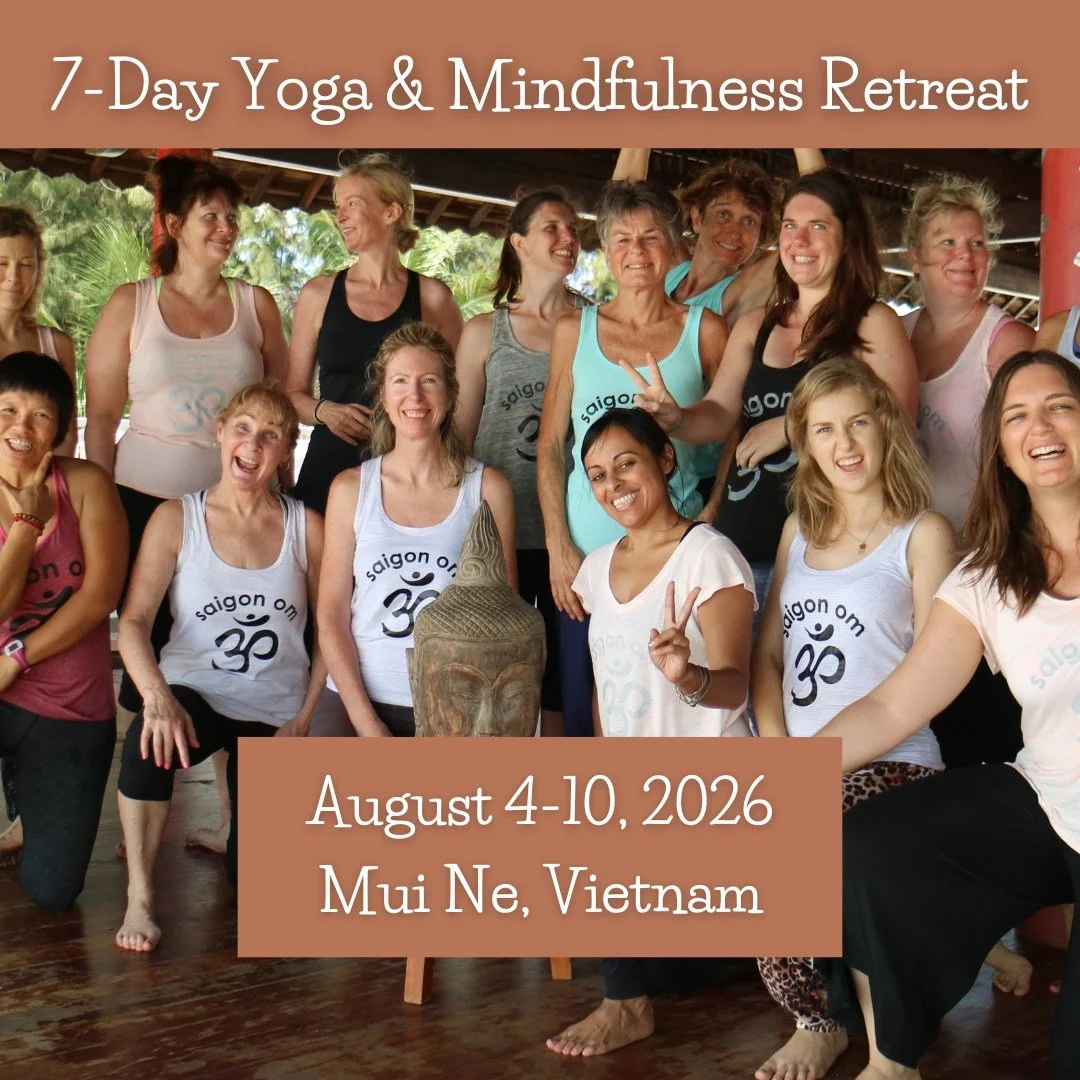
The retreat is held in a small fishing village called “Mui Ne”, which is about a 3-hour drive from Ho Chi Minh City (HCMC). The closest and most convenient international airport to arrive to is Tan Son Nhat International Airport (SGN), Ho Chi Minh City.
When to Arrive and Depart HCMC
We recommend flying into Ho Chi Minh City (Saigon) 2-3 days before the retreat begins. This allows time to rest, recover from the long journey, and acclimatise to the new time zone and culture, while also providing a buffer in case of any flight delays. You may wish to spend these first few days exploring Saigon - enjoying motorbike or food tours, or taking a day trip to the Cu Chi Tunnels or the Mekong Delta.
After the retreat, we recommend staying overnight in Ho Chi Minh City rather than flying out on the final day, as traffic in Vietnam can be unpredictable and may affect the bus journey back to Saigon. If you do need to depart on the same day, we suggest booking a late evening flight (after 7pm). Alternatively, you may arrange a private transfer directly to the airport from the resort if you need to leave earlier. Private car transfers typically cost approximately USD $100–$150. Full Moon Resort reception can help you set up with private car hiring.
Our Favourite Airlines
We’ve been travelling between Australia, Canada, and Vietnam since 2007, and some of you have asked how we usually arrange our flights to Vietnam. We’re happy to share what’s worked well for us over the years.
We don’t use a travel agent. When traveling from Canada, we usually use the Air Canada Aeroplan website to redeem our points to fly - thanks to TD aeroplan visa, or fly with VietJet directly from Brisbane when traveling from Australia.
Flights generally become available around 12 months prior to departure, so we recommend booking as soon as possible to secure your preferred routes.
CANADA TO VIETNAM
Our favourite airline for travelling from Toronto to Ho Chi Minh City is Korean Air, with a 2-4 hour layover in Seoul. We absolutely love their in-flight service - the staff are warm and friendly. And the on-demand spicy kimchi noodles are a definite highlight!
Our second favourite is EVA Air, based in Taiwan, with a layover in Taipei. They offer excellent connections from Toronto to Taipei and onward to other Asian destinations. We once found ourselves unexpectedly stuck in Taipei for four days due to a typhoon, and EVA Air took wonderful care of us with hotel accommodation and food vouchers - a big reason they remain high on our list.
When neither Korean Air nor EVA Air has been available or affordable, we’ve flown with United Airlines via the US. United Airlines can be a good option, especially if you’re travelling light and without young children. The main downside is having to clear US customs mid-journey and move your luggage between terminals, which can be a bit of a hassle. That said, fares are often cheaper and the in-flight service is good. Layovers are usually in New York, Chicago, or Los Angeles. If you have the choice, we recommend LA for a shorter onward flight to HCMC.
Air Canada is part of the Star Alliance, so you may find yourself on shared flights with Asian partner airlines under an Air Canada flight code. We really appreciate this flexibility and generally enjoy flying with AC.
In our pre-kids days, we also flew with Asiana Airlines, Japan Airlines (Tokyo layover), China Southern, China Eastern, and China Airlines - all perfectly fine experiences. Layovers in China are often in Beijing, whose airport is enormous. We actually enjoyed the long walk after a long-haul flight back then - definitely easier before children!
In terms of timing, we find a 2.5–5 hour layover ideal and don’t recommend anything longer than 10 hours if it can be avoided. If a long layover is unavoidable, an airport hotel can make a big difference. We also try to book itineraries with just one layover, which is very achievable on this route.
AUSTRALIA TO VIETNAM
Hands down, Vietnam Airlines is our top pick for the direct 8-hour flight from Melbourne to Ho Chi Minh City, with excellent in-flight service.
VietJet also offers direct flights to HCMC from Brisbane. It is a budget airline so be prepared to pay a bit extra for luggage and meals.
For more budget-friendly options, Jetstar and AirAsia are usually the most affordable, though they do involve additional stopovers.
Tourist Visas
All visitors require a Vietnam visa. At present, you can apply for a one or three-month tourist visa. Make sure you purchase a visa according to the your length of stay.
Please make sure your passport is valid for at least six months upon your arrival in Vietnam.
We recommend applying for your visa as soon as your flights to Vietnam are booked. Processing times for visa applications are usually around two weeks. If you go through a travel agent, sometimes, they’ll save you the headache and apply for a Vietnam visa for you as well. Please ask your travel agent.
Once you receive your visa, please carefully check that your name is spelled exactly as it appears on your passport, including all middle names. Any discrepancy, even a small spelling error or a missing middle name, may prevent you from boarding your flight, as Vietnamese immigration requirements are very strict.
You can apply for a tourist visa through the Vietnam Embassy in your home country. Please make sure to apply directly through the official Vietnam Embassy, in person or online, and follow their instructions step by step. Double check that you are not applying for online visa applications through unauthorized websites as this can cause a lot of inconvenience (i.e. you may not be permitted to board the plane, denied entry, or pay a fine because of fake visas). Here are the official links below:
Travel Insurance
We strongly recommend purchasing travel insurance for peace of mind, either through your travel agent or a third-party provider. We used World Nomads when it was just the two of us, and more recently have found Costco to be more affordable for families in both Canada and Australia.
Other options to explore include CAA or AAA, (Canada) and RACV or RACQ (Australia). We suggest shopping around to find the coverage that best suits your needs.
Boarding Passes
Once you arrive in Vietnam, keep all your boarding passes from the journey handy. Immigration or customs may ask to see them along with your passport and visa as proof of your entry flight. Having these ready can help avoid any delays.
When you arrive at Tan Son Nhat Airport in HCMC
After clearing customs, take a deep, joyful breath (or two!) and exit through the main door. Follow the signs to the taxi stand, which is located on the far left as you leave the airport.
Depending on the time of day, the crowd near the taxi stand can be overwhelming, so take care of your belongings and continue to breathe, smile, and stay calm. You may notice some taxi drivers approaching to offer rides at inflated prices. Confidently say, “No, thank you,” and keep walking - moving with purpose like you know where you’re going. They’re not aggressive; they’re simply looking to make a little extra, so don’t be tempted to stop and chat.
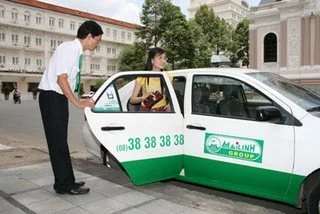
At the taxi stand, look for a representative from Mai Linh or Vinasun taxi companies - they’re usually wearing a white shirt with a green or red tie. These are the most reliable taxi companies in Vietnam, and we encourage you to use them throughout your travels.
A taxi ride to District 1 (downtown) costs about 140,000–200,000 VND on the metre (~$7–$10 USD) plus 10,000 VND ($0.50 USD) airport tax, and takes roughly 10–15 minutes, depending on traffic and the time of day. Most taxis take credit cards but we suggest to have some VND handy just in case.
Sit back and enjoy the “orderly chaos” of your ride. We remember being in awe the first time we experienced Ho Chi Minh City for ourselves!

SIM or eSIM Cards
For peace of mind while travelling before and after the retreat, you can purchase a local SIM or eSIM card in Vietnam at very reasonable prices. Upon landing at Ho Chi Minh City Airport, there are booths selling SIM/eSIM - we recommend buying one there. It’s typically about $1 USD more than purchasing at a phone shop in District 1, but it saves time and the staff at the airport booths all speak English. We recently landed at midnight in HCMC, and the booths were still open. If the booths happen to be closed, your hotel can direct you to a nearby shop.
Our three recommended phone providers with reliable country-wide service are Viettel, Mobifone, and Vinaphone. You will need to show your passport when purchasing, which is standard in Vietnam.
We suggest getting a plan that covers your entire stay for peace of mind. For example, the last time we were there for 2.5 months, Sarah purchased a 3-month plan with Mobifone for $30 USD, which included 10 GB of data per day - more than enough for maps, calls, and staying connected throughout our trip.
Accommodation in HCMC
Ho Chi Minh City has over 1,000 hotels to choose from. Most 3-star hotels are perfectly comfortable for a short stay, while those wishing to splurge will find options with swimming pools and generous breakfast buffets.
Below are our recommended hotels in Saigon for before and after the retreat, all of which have been tried and approved by friends and past retreat participants. Each is located in District 1, within a short walk or taxi ride of the bus meeting point near well-known Ben Thanh Market.
The list is arranged from lowest to highest price to help you choose an option that best suits your budget.
$
Halo Boutique Ben Thanh Hotel ( 25 metres from our bus pick up/drop off point)
Hong Vina Luxury Hotel
Cherry Hotel
Sophia Hotel
Liberty 2 Hotel
The Luxe Hotel
Lavender Hotel
Ruby Riverside Hotel
$$
Any of the three Liberty Central hotels: there’s one on the river and the other two are close to Ben Thanh Market.
Silverland Hotels (five locations in HCMC)
Any of the A&EM chain
Asian Ruby Luxury Hotel
$$$
The Rex Saigon: The Americans used this building as its headquarters during the Vietnam War.
Sofitel Saigon Plaza: Close to the famous Notre Dame Cathedral.
Hotel Majestic. For a river view. On a bustling street of downtown.
Money Exchange in HCMC
The dong (VND) is the official currency of Vietnam. We suggest exchanging around $200 USD into VND before you travel, which is handy for paying taxi fares from the airport and for initial food or drinks. A quick rule of thumb when shopping at markets is $1 USD ≈ 20,000 VND.
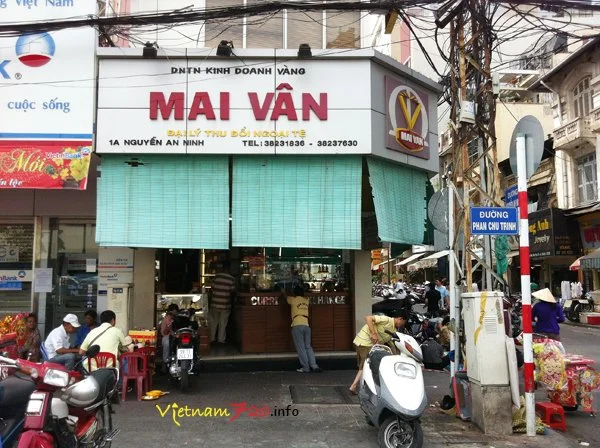
If you need to exchange money after arriving in Ho Chi Minh City, the best areas are around Ben Thanh Market in District 1, near our bus meeting point at 26 Thu Khoa Huan Street. Our favourite exchange spot with the best rates is Mai Van at 1A Nguyen An Ninh Street, facing the west gate of Ben Thanh Market.
For ease and security, we recommend bringing larger bills from home (e.g., $100 AUD/USD/CAD or £50). They’re less bulky, easy to count quickly at busy exchange booths, and reduce the risk of handling lots of small notes, AND you get a better exchange rate with large notes. Ben Thanh Market can be crowded and a little chaotic, so please stay vigilant with your belongings.
Crossing the Road
Crossing the road in Vietnam can feel chaotic at first because of the large number of motorbikes and vehicles constantly moving through the streets. However, there’s an unspoken flow and rhythm between drivers and pedestrians that makes it manageable with the right approach. Once you understand the flow and move confidently, crossing Vietnam’s streets becomes much easier - think of traffic as a river that can adjust around you if your pace is steady and predictable.
Key points:
Traffic is busy but adaptable: Motorbikes make up the majority of traffic, and both riders and walkers learn to adjust to each other’s movements.
Follow basic road rules: Use sidewalks where available, cross at traffic lights or designated crossings, and watch for gaps in traffic.
Be visible and confident: Raising your arm while crossing helps drivers see you. Walk with a steady, predictable pace - stopping or hesitating can be more dangerous.
Stay calm: Honking is normal and not always a warning - it’s part of the local communication on the road.
Use local cues: If you’re unsure, cross with other pedestrians or follow locals; their confidence helps signal to drivers that they should navigate around you.
What To Do in Ho Chi Minh City
AO Show – Lune Production
A must-see! Think Cirque du Soleil vibes, but without the fancy equipment. Truly magical.Street Food Tours – Saigon Street Eats
Run by our friends Barbara and Vu, this is a fun and delicious way to experience Saigon’s vibrant food culture.Hop-on Hop-off Bus Tour – Hop On Hop Off
A convenient way to explore the city at your own pace. We suggest taking the early bus to stay cool.Ben Thanh Market
A classic Saigon market full of sights, sounds, and flavours. Keep an eye on your belongings and don’t forget to barter - it’s part of the fun and culture! For example, if they offer “400,000 VND,” you can counter with 300,000 VND, and they’ll likely settle around 350,000 VND.Day Trip to the Mekong Delta – The Sinh Tourist
Explore the lush river landscapes, floating markets, and traditional villages.Cu Chi Tunnels Half-Day Tour – The Sinh Tourist
Discover the fascinating history and ingenuity of the tunnels used during the Vietnam War.Your hotel will also be able to help you with other short fun activities like a Vietnamese cuisine cooking course or where to go for shopping.
Our Favourite Restaurants in Ho Chi Minh City
Maison Marou – Maison Marou
Hands down the best chocolate in the world, for real! A must-visit for chocolate lovers.Pizza 4P’s – Pizza 4P’s
Some of the most amazing pizzas you’ll ever taste. Hang’s favourite is the margherita, Sarah loves the four cheese, and our kids can’t get enough of their spaghetti. Several locations across the city. They make their own gingerale! Last time we were there (2024), they had 2-for-1 happy hours for drinks between 4 and 5pm.Quan Bui – Quan Bui
Our favourite spot for authentic Vietnamese cuisine, with a few locations to choose from. Try the garlic rice and any of the stir fried vegetable dishes.The Deck Saigon – The Deck Saigon
A beautiful riverside location in District 2, perfect for fancy cocktails and watching the Saigon River flow by. This was our weekly “date” spot.
Travelling Around Vietnam
Vietnam is wonderfully easy to explore with affordable domestic flights, as well as trains and buses if you want a countryside experience. Here are some of our top picks:
Mekong Delta
A 1- or 2-day trip with Sinh Tourist is perfect for seeing the Mekong way of life. Hang was born in My Tho and lived there until she was six, you’ll know you’re there when you spot the coconut candy factory or the crocodile farm!
Nha Trang
A coastal resort city in southern Vietnam, Nha Trang is famous for its beaches, diving sites, and offshore islands. The main beach stretches along Tran Phu Street, lined with a promenade, hotels, and seafood restaurants.
Snorkeling & Diving: We recommend Rainbow Divers for boat trips: Rainbow Divers
Boutique Stay: Mia Resort is gorgeous: Mia Nha Trang
Hoi An
Hoi An is a central coast city known for its well-preserved Ancient Town and picturesque canals. Its mix of architecture reflects Chinese, French, and Vietnamese influences, with highlights including the Japanese Covered Bridge and traditional shophouses.
Getting There: Fly to Danang Airport. Most hotels provide transfers (~40-minute drive). Beachside hotels often offer free daily shuttles to Ancient Town for shopping, sightseeing, and dining.
Favourite Restaurants:
Morning Glory – Vietnamese cuisine
Mango Mango: mangomangovietnam.com
Cargo Club: Cargo Club – European-style café & restaurant
Ms Vy’s Cooking Classes: Ms Vy’s
Our niece lived in Hoi An for four years and shares her favourite spots here: Top Places to Eat, Drink & Work
Hanoi
The capital city is rich in history and culture, with centuries-old architecture influenced by Southeast Asian, Chinese, and French traditions. At its heart is the bustling Old Quarter, narrow streets roughly arranged by trade. Highlights include Bach Ma Temple and Đồng Xuân Market, a lively hub for street food and local goods.
More info: Salt in Our Hair – Hanoi
Hanoi
Hanoi, the capital of Vietnam, is known for its centuries-old architecture and a rich culture with Southeast Asian, Chinese and French influences. At its heart is the chaotic Old Quarter, where the narrow streets are roughly arranged by trade. There are many little temples, including Bach Ma, honoring a legendary horse, plus Đồng Xuân Market, selling household goods and street food. To read more about what to do in Hanoi: https://www.saltinourhair.com/vietnam/hanoi/
Halong Bay
Famous for its dramatic limestone islands, Halong Bay is a UNESCO World Heritage site with around 2,000 islands covered in lush vegetation. Many islands feature caves and floating villages. The best way to explore is by cruise, allowing you to see the islands up close.
Sapa
A highland town in northern Vietnam, Sapa is known for its breathtaking mountain landscapes, valleys, and terraced rice paddies. The town also hosts a vibrant market full of colourful treasures. Outdoor activities include hiking, cycling, and rafting, with sunsets that are truly unforgettable.
More info: Trekking Tours Sapa
Safety in Vietnam
Vietnam is a relatively safe country for travelers. Pre-pandemic, it was even voted one of the safest countries to visit. Tourism is a major part of the economy, and the safety of visitors is a top priority. Violent crime is rare, and tourists’ main concern is usually petty crime - such as pickpocketing, bag-snatching, or cell phone theft. Following local customs, showing respect, and being courteous go a long way in avoiding misunderstandings, ensuring your trip runs smoothly.
For more detailed guidance, we recommend reading:
Is Vietnam Safe to Travel? 12 Things You Should Know (includes helpful dos and don’ts)
Dos
Greetings: There are no formal cultural expectations for foreigners - greet people as you would at home.
Dress modestly: Vietnamese people dress conservatively. Even in the heat, avoid showing too much skin.
Stay hydrated: Drink plenty of bottled water while sightseeing. Vendors are everywhere, so no need to carry large bottles. Remember that tap water is not safe to drink.
Secure valuables: Keep cash, credit cards, airline tickets, and other essentials in a safe place.
Travel smart: Use recommended tour agencies. Research your journeys in advance online to avoid unreliable operators or poorly run hotels.
Small handbag: Carry a small cross-body bag that can be tucked under your blouse. Out of sight, out of mind.
Adjust expectations: Vietnam is a developing country, and things may not always run as you’re used to. Stay aware, but don’t be paranoid - just enjoy the experience.
Stay calm: Losing your temper is seen as a loss of face. Remaining polite and composed will get you further.
Don’ts
Avoid flashy accessories: Don’t wear lots of jewellery or carry large handbags. Violent crime is rare, but petty theft is more common.
Motorbike taxis (xe ôm): Keep bags hidden and secure. Bag snatching is rare but more likely if valuables like cameras or laptops are exposed.
Temple & pagoda attire: Wear respectful clothing. Avoid wearing singlets, shorts, skirts, dresses, or revealing clothing when visiting religious sites.
Public displays of affection: Physical affection is frowned upon. Couples may hold hands, but hugging or kissing in public is uncommon.
Retreat Guide
Have you read our Retreat Guide yet? Click on the button below to read our guidance to help make your experience easeful and memorable.
In Summary
Vietnam is a truly unique and stunning country to explore. We hope you have fun planning your trip, and please don’t hesitate to email us at hello@saigonom.com if you have any questions. We’re always happy to help!
With a cà phê sữa đá (iced coffee) smile,
Sarah & Hang